
Endoscopy - the most reliable way of diagnosing diseases, in which the doctor gets the opportunity to see the state of the patient's internal organs. The examination is carried out with the help of an endoscope - a thin tube with a video camera at the end, which is inserted through natural channels.
Specially trained endoscopists of the "Vitamin" medical center use the following types of endoscopic examinations in diagnosis:
Gastroscopy
- Colonoscopy

Gastroscopy
Gastroscopy or FGDS (esophagogastroduodenoscopy) in Uzhhorod is currently the most informative and safe method of examining the esophagus, stomach and duodenum.
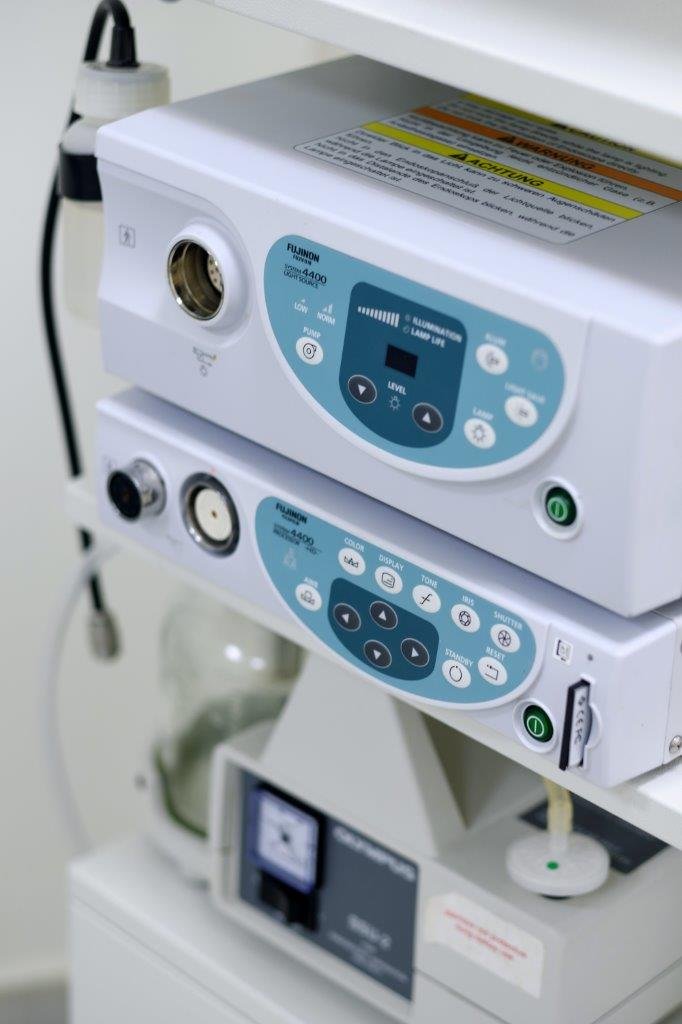
In the "Vitamin" medical center, leading Japanese-made Fujinon devices are used. The system is built on the basis of modern technologies and opens up new diagnostic possibilities, provides high clarity and wide image processing capabilities. The dual view mode allows you to simultaneously display a normal and FICE image on the screen. Parallel viewing of two images provides more information for research and diagnosis.
On the monitor, the doctor sees an image in ultra HD quality with the possibility of 20-fold optical magnification. This allows you to see the smallest changes and find diseases in the early stages.
With this device, the doctor can perform a biopsy - take a piece of tissue for microscopic examination. If necessary, the doctor has the opportunity to do it immediately, without further interventions.
How to prepare for the gastroscopy procedure?
In order for the results of gastroscopy to be of high quality, it is important to prepare for the examination:
- if the procedure is in the morning, come on an empty stomach;
- if in the evening, you can eat a light breakfast, but wait at least 6 hours without food.
Is anesthesia necessary?
We work according to European standards and advise to carry out the examination in a state of medicated sleep. The patient "sleeps" during the procedure without unpleasant sensations. After general anesthesia, there is usually no discomfort. But, if the patient does not want anesthesia, the doctor will perform a gastroscopy under local anesthesia.
Colonoscopy
Colonoscopy is an endoscopic examination of the large intestine.
The Vitamin Medical Center uses an expert-class video endoscopic system made in Japan by Fujinon. The system is built on the basis of modern technologies and opens up new diagnostic possibilities, provides high definition and wide possibilities for image processing. In dual-view mode, a regular and FICE image are simultaneously displayed on the screen. And parallel viewing of two images provides more information for research and diagnosis.
The doctor sees images on the monitor in ultra HD quality with the possibility of 20-fold optical magnification. This makes it possible to notice the smallest changes and find diseases in the early stages.
With the Fujinon endoscope, the doctor can perform a biopsy - take a piece of tissue for microscopic examination. If necessary, it is possible to do it immediately, without further interventions. Sometimes during the procedure, medical manipulations are performed immediately: the doctor removes polyps, cauterizes bleeding vessels, and treats the mucous membrane with drugs.
For which symptom is a colonoscopy prescribed?
- with prolonged constipation
- with intestinal obstruction
- with bleeding from the intestines
- if non-specific ulcerative colitis, Crohn's disease or tumors are suspected
How to prepare for the colonoscopy procedure?
- On the eve of the procedure, clean the intestines with a special solution.
- Three days before the procedure, switch to a "slag-free diet".
What diet should I follow before the colonoscopy procedure?
Light breakfast: low-fat cheese, eggs, pasta, wholemeal bread, peeled boiled potatoes, boiled rice with lean fish, skinless chicken breast. For breakfast, you cannot eat any products that contain fiber: cabbage, legumes, buckwheat and other cereals.
Lunch, dinner and other meals: clear liquids (water, tea, coffee without milk), carbonated or non-carbonated soft drinks, juices from pureed fruits without pulp. It is important to exclude red and purple liquids, milk and alcoholic beverages.
Is anesthesia necessary?
We work according to European standards and recommend conducting research in the state of medicated sleep. Before the procedure, you "fall asleep" and do not feel discomfort. But, if you want, the doctor will perform the procedure under local anesthesia.
Make an appointment
Leave your contact details and our manager will call you to clarify all the details.
After successful sending, the manager of the Vitamin medical center will call you.